
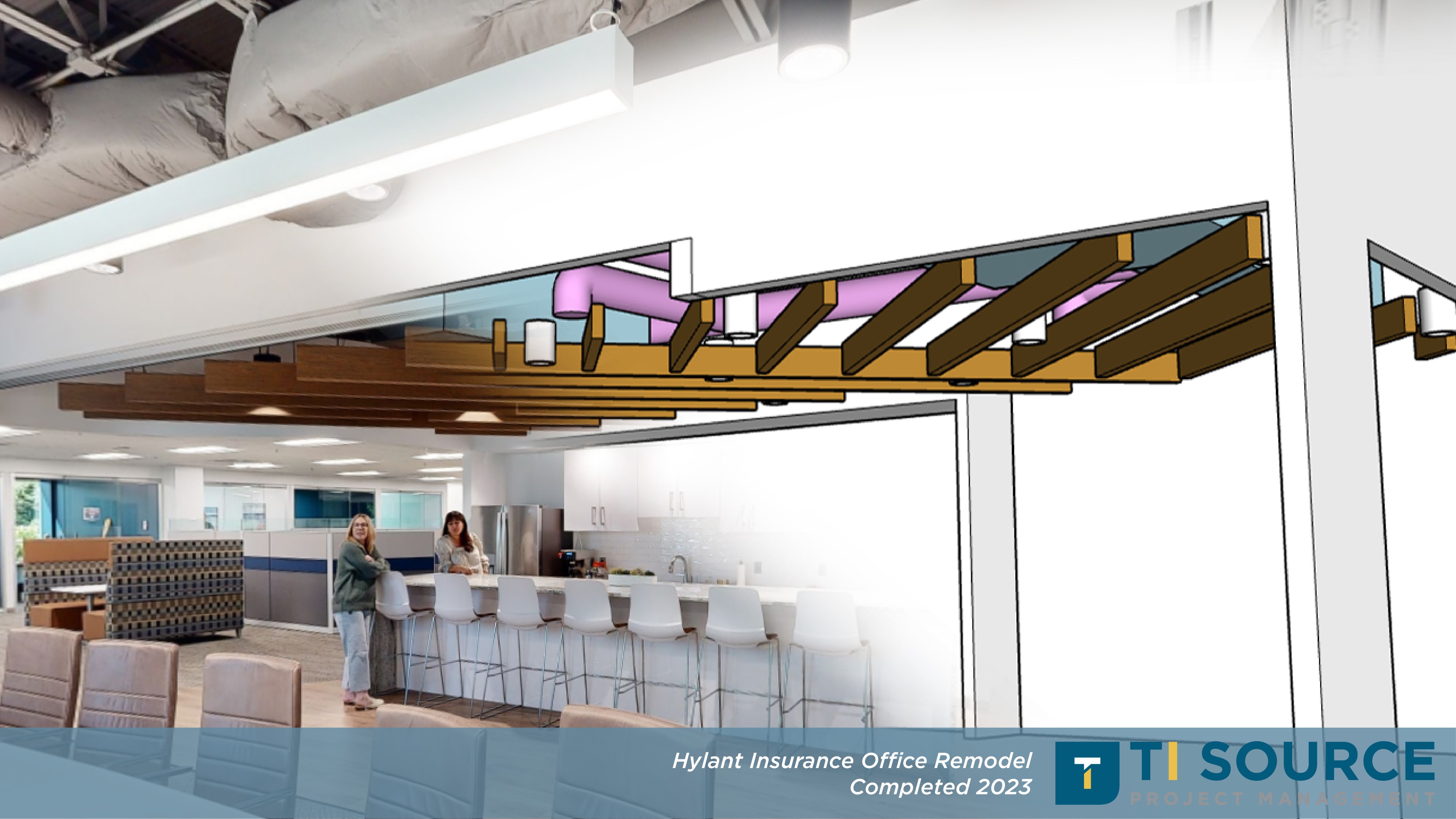
The Value of Having CAD + Construction Under One Roof
When planning a commercial renovation or tenant improvement project, one of the first decisions you’ll face is how to structure your team. Traditionally, design and construction are handled by separate groups: an architect or designer creates the plans, then a contractor steps in to execute them. While that approach can work, it often introduces gaps in communication, unexpected costs, and longer timelines.
An integrated approach where Computer-Aided Design (CAD) and construction are handled under one roof offers a more efficient, collaborative, and predictable path from concept to completion. For businesses looking to renovate, expand, or reconfigure space, that difference matters.
Here are a few of the most valuable aspects of an integrated CAD and construction firm.
Simplicity
One of the biggest advantages of combining CAD and construction services is the simplicity it offers. Instead of coordinating between multiple firms, you’re working with a single, unified team from start to finish. That means fewer handoffs between designers and builders, clearer communication throughout the project, and faster decision-making when adjustments are needed.
When design and construction teams are aligned from day one, projects move forward with fewer interruptions. Questions get answered quickly, and potential issues are identified earlier before they become costly delays.
Better Cost Control
In a traditional model, designs are often completed before construction pricing is fully understood. This can lead to a frustrating cycle of redesigns when bids come in over budget. With an integrated CAD and construction team, pricing and design evolve together. As layouts are developed, construction professionals can provide real-time cost feedback, helping guide decisions that stay within budget. This approach allows you to prioritize where to invest and where to save, avoid costly redesigns, and maintain financial clarity. Ultimately, it leads to more accurate budgeting and fewer surprises.
Improved Collaboration and Accountability
When multiple companies are involved in a project, responsibility can become fragmented. If something doesn’t go as planned, it’s not uncommon for fingers to get pointed between the designer and the contractor. A single team eliminates that disconnect. Designers and builders working side by side are naturally more collaborative. They understand each other’s priorities and constraints, which leads to smarter, more practical solutions. It also creates a clear line of accountability. Everyone is working toward the same goal, with shared responsibility for the outcome.
Faster Project Timelines
Time is often one of the most critical factors in a commercial project. Delays can impact operations, revenue, and long-term planning. An integrated approach helps reduce timeline risk in several ways. Design and construction phases can overlap when appropriate, revisions can be implemented quickly without completely restarting, and field teams have direct access to designers for clarification. Because the entire team is aligned, projects tend to move more efficiently from planning to completion.
Effective Designs
A well-designed space on paper doesn’t always translate into construction. Without input from builders during the design phase, plans can include elements that are difficult, expensive, or impractical to execute. Bringing construction expertise into the design process ensures that what’s drawn is realistic and buildable. Details like material selection, structural considerations, and installation methods are evaluated early, leading to designs that function as intended once construction begins. This means fewer change orders during the construction process, more efficient use of materials and labor, and a smoother project process overall.
Flexibility
Changes are a natural part of most commercial projects. Adapting quickly is a valuable skill, whether the issue is a shift in business needs, budget adjustments, or unforeseen conditions.
With CAD and construction under one roof, changes can be handled without as much interruption. Designers and builders can collaborate in real time to revise plans, assess impacts, and implement solutions without slowing down the entire project. That flexibility keeps projects moving forward, even when conditions evolve.
Better Client Experiences
The structure of a project team directly impacts your experience as a client. Working with multiple firms can mean juggling conversations, timelines, and expectations. An integrated team simplifies that experience. You have a single point of contact, a cohesive strategy, and a group of professionals working in sync. For business owners, that means less time managing the project, more confidence in the process, and a much smoother path to completion.
Combining CAD design and construction services is about creating a more effective way to deliver commercial projects. By aligning planning, pricing, and execution under one team, businesses gain better control over their timeline, budget, and outcome.
An integrated approach can really make a difference in both the process and the results, whether you’re renovating an office suite or building out something completely new. For companies looking to move efficiently and make informed decisions along the way, having CAD and construction under one roof is a smarter way to build.